
Blog
From Melting to Trimming: Planning Equipment for an Aluminum Die-Casting Cell

An aluminum die-casting cell depends on more than the casting machine. Metal must arrive at the correct temperature and quality, tooling must be supported, castings must be trimmed consistently, and each piece of equipment must match the production rate. Planning the cell as one connected process helps manufacturers avoid bottlenecks between melting, holding, casting, and finishing.
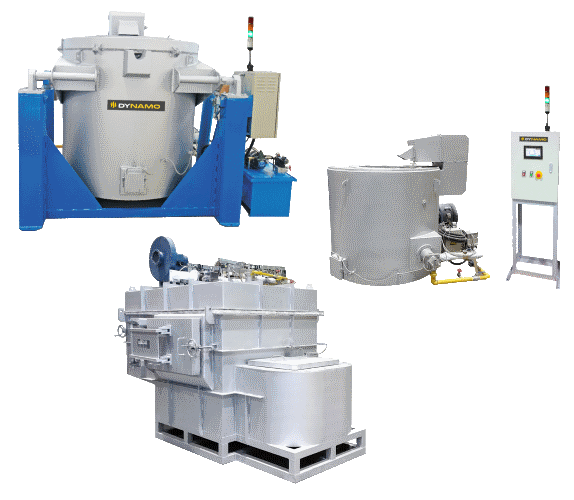
Start with the required casting output
The useful starting point is the production target: casting weight, shots per hour, number of casting machines, alloy changes, scrap returns, planned operating hours, and acceptable downtime. Those numbers determine how much molten metal the operation consumes and how quickly finished castings reach downstream equipment.
A furnace selected only by nominal holding capacity can be undersized if the required melt rate is ignored. A trim press selected only by maximum tonnage can create delays if the loading method, daylight, stroke, tooling change, or cycle time does not match the casting cell. The complete process should therefore be reviewed before individual machines are specified.
1. Melting equipment establishes available metal supply
The melting stage converts ingot, returns, scrap, or other approved charge material into usable molten metal. Foundries can compare gas-fired melting furnaces and electric melting furnaces based on energy availability, throughput, temperature control, emissions requirements, operating schedule, and maintenance resources.
Charge form matters as well. Dense ingot behaves differently from light-gauge scrap or oily machining chips. Facilities processing chips should review the complete recovery sequence, including sorting, moisture control, drying, and a suitable aluminum chip-melting furnace. Wet material must never be introduced into molten metal because trapped moisture can expand violently into steam.
2. Holding capacity stabilizes the casting cell
A melting furnace and a holding furnace perform related but different jobs. The melter supplies metal; the holder maintains a controlled reserve near the casting process. Properly planned molten-metal holding furnaces help buffer changes in demand, reduce temperature swings, and keep the casting machine supplied while the melting stage recovers after charging.
For each casting machine, planners should document the required metal temperature, hourly consumption, refill quantity, refill frequency, allowable temperature recovery time, and transfer method. Dynamo’s guide to central versus at-machine holding furnaces explains the main layout tradeoffs.
3. Molten-metal transfer connects melting and casting
Metal may move by ladle, transfer vessel, launder, pump, or another engineered method. The chosen approach affects heat loss, traffic paths, operator exposure, metal cleanliness, refill timing, and floor-space requirements. Transfer routes should be planned together with forklift travel, maintenance access, guarding, emergency procedures, and the location of the casting machines.
Facilities building or expanding a cell can use Dynamo’s foundry furnace floor-layout guide and molten-aluminum transfer planning guide as starting checklists. Site-specific engineering and applicable safety requirements must still govern the final layout.
4. Trimming must keep pace with casting
After ejection, many die castings require runners, gates, flash, or overflow material to be removed. A dedicated hydraulic trim press can provide a controlled and repeatable finishing step. The press must be selected around the casting envelope, trim-die dimensions, required force, stroke, daylight, loading height, guarding, part removal, scrap handling, and target cycle time.
The trim operation should be modelled against the casting machine’s output. If one trim press serves multiple casting machines, planners should include transfer time, tool changes, planned maintenance, operator availability, and peak demand. A machine with adequate force can still become the cell’s bottleneck when these handling details are overlooked.

5. Tooling and maintenance need safe handling
Die-casting and trimming tools are valuable, heavy assets. Maintenance teams may need to rotate them for inspection, cleaning, repair, assembly, and storage. A purpose-built die or mold upender provides controlled rotation without relying on improvised forklift or crane movements. The machine must be sized for the complete tool weight, footprint, centre of gravity, loading method, final orientation, and required duty cycle.
Tool transport also affects changeover time. Die and mold transfer carts can support movement between storage, maintenance, spotting, and production areas when their deck height, capacity, steering, and transfer method match the facility.
Information to collect before requesting equipment proposals
- Alloy and approved charge-material forms.
- Required melt rate, holding capacity, and operating temperature.
- Casting weight, shot rate, number of casting machines, and shift schedule.
- Molten-metal transfer method and distance.
- Casting and trim-tool dimensions, weights, and changeover method.
- Trim force, stroke, daylight, loading height, and target cycle time.
- Utilities, voltage, gas supply, ventilation, emissions, and controls requirements.
- Available floor space, traffic routes, foundations, guarding, and maintenance access.
- Testing, installation, commissioning, operator training, and spare-parts expectations.
Coordinate the cell as one production system
Dynamo Furnaces focuses on melting, holding, recycling, casting, and thermal-processing equipment. MetalPress Machinery focuses on industrial presses, die and mold handling, coil handling, and production-support equipment. Axiom Machinery connects these capabilities when a customer’s project crosses both parts of the process.
For help defining the equipment interfaces and the information needed for a useful proposal, contact Axiom Machinery. Final equipment selection should always be based on the customer’s verified process data, site conditions, applicable standards, and engineering review.